





DIY vs Professional Pressure Washing — An Honest Comparison for Lower Mainland Homeowners
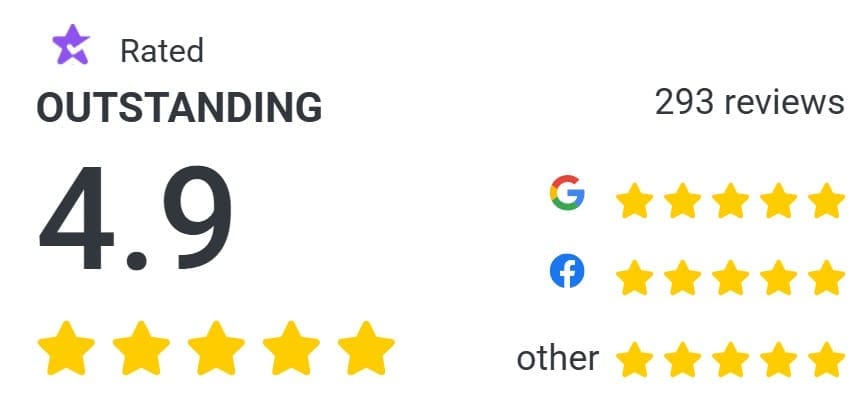
Every spring, thousands of homeowners across Surrey, Delta, Langley, and the wider Lower Mainland face the same decision: should they rent a pressure washer from the local hardware store and tackle their exterior cleaning themselves, or should they hire a professional pressure washing company to handle the job? It is a fair question, and the answer is not always straightforward. There are legitimate situations where DIY pressure washing makes sense, and others where hiring a professional is clearly the smarter choice. This guide examines both options honestly, covering cost, results, safety, risk, and time investment so you can make an informed decision for your property. If you decide professional service is right for you, Shine City Pressure Washing serves the entire Lower Mainland with a 5.0-star rating from 291+ verified reviews. Call (604) 229-5354 or visit our free quote page for a no-obligation estimate.
Updated for 2026 — this guide reflects the latest exterior cleaning services and pricing in Metro Vancouver.
Table of Contents
- DIY vs Professional Pressure Washing — An Honest Comparison for Lower Mainland Homeowners
- The True Cost of DIY Pressure Washing
- What Consumer Equipment Cannot Do
- Safety Considerations
- When DIY Pressure Washing Makes Sense
- When You Should Hire a Professional
- The Professional Advantage — Equipment, Training, and Insurance
- Frequently Asked Questions
The True Cost of DIY Pressure Washing
For an average Lower Mainland house, pressure washing is usually $350–$800. These prices are a helpful guide based on similar jobs. Every property is different, so we’ll give you a free, personal quote before any work begins—so you know exactly what to expect.
First, consider the time investment. A homeowner with no pressure washing experience can expect to spend six to ten hours cleaning their home’s exterior, driveway, and patio — surfaces that a two-person professional crew with commercial equipment can complete in two to three hours. Your time has value, and a full weekend day spent wrestling with a pressure washer is a weekend day you are not spending with your family, pursuing hobbies, or simply relaxing.
Second, factor in the learning curve. Consumer and rental pressure washers do not come with comprehensive training on proper technique, surface-specific pressure settings, chemical dilution ratios, or nozzle selection. The instruction manual covers how to start the machine, not how to wash a house without damaging siding, forcing water behind cladding, or etching concrete. Learning these skills through trial and error means your home becomes the practice surface, and mistakes on exterior surfaces can be permanent and expensive.
Third, account for the risk of damage. Insurance claims for pressure washing damage are far more common than most people realize. A misaimed high-pressure stream can crack vinyl siding, gouge wood, etch glass, destroy window screens, strip paint, and force water into wall cavities where it causes hidden mould growth. These repair costs can easily exceed the price of professional pressure washing by a factor of five or ten.
What Consumer Equipment Cannot Do
The pressure washers available for consumer purchase or rental operate at a fraction of the capacity of commercial equipment. A typical consumer electric pressure washer delivers 1,500 to 2,200 PSI at 1.2 to 1.8 gallons per minute. A quality consumer gas model reaches 2,700 to 3,200 PSI at 2.2 to 2.5 GPM. Compare that to commercial equipment that delivers 3,500 to 4,000 PSI at 4.0 to 5.5 GPM, paired with professional surface cleaners, downstream injection systems, and hot-water capabilities. The difference in cleaning speed and effectiveness is enormous.
More importantly, consumer equipment lacks the accessories and chemical delivery systems that make professional cleaning truly effective. Surface cleaners — the rotating disc attachments that provide uniform, streak-free coverage on flat surfaces — are available in consumer sizes, but they are small, flimsy, and prone to leaving visible lines and uneven results. Professional surface cleaners are 18 to 24 inches in diameter, built from heavy-gauge stainless steel, and engineered to deliver perfectly uniform cleaning across driveways, sidewalks, and patios. The difference in result quality between a consumer wand and a professional surface cleaner is immediately visible.
Chemical application is another area where consumer equipment falls short. Professional pressure washing relies heavily on specialized cleaning solutions — soft wash detergents for siding, degreasers for concrete, biocides for moss and algae, brighteners for post-wash treatment. Professional systems deliver these chemicals at precise dilution ratios through calibrated downstream injectors. Consumer setups typically offer a rudimentary soap siphon tube that provides inconsistent chemical concentration and limited reach.
Safety Considerations
Pressure washing is more dangerous than most homeowners realize. Emergency rooms across North America treat thousands of pressure washer injuries annually, ranging from lacerations and puncture wounds to eye injuries and electrical shock. A 3,000 PSI pressure washer delivers enough force to cut through skin and muscle tissue at close range, and the combination of high pressure, slippery surfaces, electrical connections, and elevated work creates a genuinely hazardous working environment.
Working at height adds another layer of risk. Many homeowners attempt to pressure wash their home’s second storey from a ladder, which is one of the most dangerous combinations in residential maintenance. The recoil from a pressure washer wand can throw an inexperienced operator off balance, and a fall from a ladder while holding a running pressure washer can result in catastrophic injury. Professional companies use extension wands, telescoping poles, and soft wash systems that allow them to clean upper storeys safely from ground level.
Chemical safety is also a concern. The cleaning solutions used in professional pressure washing include sodium hypochlorite, surfactants, degreasers, and other compounds that require proper handling, mixing, and personal protective equipment. Skin and eye contact with concentrated cleaning chemicals can cause chemical burns, and improper mixing can produce toxic fumes. Professional technicians are trained in chemical handling, carry appropriate PPE, and understand the environmental regulations governing chemical use and runoff management.
When DIY Pressure Washing Makes Sense
In fairness, there are situations where DIY pressure washing is a reasonable choice. If you own a consumer-grade pressure washer and you need to clean a small, low-risk area — such as rinsing patio furniture, washing garbage cans, cleaning a garden shed, or spraying down outdoor toys and play equipment — there is no compelling reason to hire a professional. These tasks involve low stakes, small surface areas, and minimal risk of damage.
Regular maintenance rinsing between professional cleanings is another scenario where DIY makes sense. After your home has been professionally washed, periodic light rinsing with a garden hose or low-pressure washer can help maintain the clean appearance between annual professional service visits. This is not a substitute for proper cleaning, but it can extend the interval between professional washes.
Homeowners with genuine mechanical aptitude and willingness to research proper techniques can also achieve acceptable results on durable surfaces like standard poured concrete. A flat concrete driveway with no special finish is relatively forgiving of technique errors, and a consumer surface cleaner attachment can produce a reasonably clean result with patience and care.
When You Should Hire a Professional
For the following situations, professional pressure washing is strongly recommended over DIY approaches:
Home exterior and siding — Regardless of siding type (vinyl, Hardie board, stucco, wood, aluminum), improper washing technique risks water intrusion, physical damage, and voided warranties. Professional soft wash systems deliver superior results without these risks.
Roof cleaning — Never attempt to pressure wash your roof. The damage potential is extreme, and most roof manufacturers explicitly void their warranty if the roof is pressure washed. Professional roof cleaning uses specialized low-pressure soft wash methods that no consumer equipment can replicate.
Multi-storey homes — Any cleaning that requires working above ground level should be left to professionals with proper equipment and safety training.
Exposed aggregate and decorative concrete — These premium surfaces require carefully calibrated pressure to clean without dislodging aggregate or damaging decorative finishes. The cost of repairing damaged aggregate far exceeds the cost of professional cleaning.
Wood decks and fences — Wood is extremely susceptible to pressure damage. Incorrect pressure or technique can raise the wood grain, gouge soft wood fibres, and create permanent surface damage. Professionals use specific wood-cleaning solutions and controlled low-pressure techniques.
Pre-sale preparation — If you are preparing your property for sale, the investment in professional cleaning pays for itself many times over in improved first impressions and perceived property value. This is not the time for DIY experimentation.
The Professional Advantage — Equipment, Training, and Insurance
Professional pressure washing companies bring three critical advantages that DIY simply cannot match: commercial equipment, technical training, and liability insurance. Commercial equipment — including truck-mounted hot water units, professional surface cleaners, soft wash systems, and calibrated chemical injection — delivers faster, more thorough results on every surface type. Technical training means every technician understands the specific requirements of different surfaces, the correct chemical formulations for different contaminants, and the optimal techniques for each situation. And liability insurance protects you as the homeowner — if something goes wrong during a professional cleaning, the company’s insurance covers the repair cost. When you damage your own property during a DIY project, the repair bill is entirely yours.
Frequently Asked Questions
Is renting a pressure washer worth it?
For small, low-risk tasks, renting can be cost-effective. For cleaning your home’s exterior, driveway, deck, or roof, the combination of inferior results, damage risk, and time investment typically makes professional service the better value. Factor in the rental cost, chemical costs, your time, and the risk of accidental damage, and professional cleaning is often comparable in total cost while delivering far superior results.
How much does professional pressure washing cost compared to DIY?
A professional house wash in the Lower Mainland typically runs $250 to $500 depending on home size and condition. A rental pressure washer costs $75 to $120 per day, plus $30 to $60 in chemicals, plus your entire day of labour. When you factor in the value of your time and the risk-adjusted cost of potential damage, professional service is often the more economical choice for anything beyond basic maintenance tasks.
Can I damage my home with a rented pressure washer?
Yes, and it happens frequently. The most common DIY pressure washing damage includes cracked or broken vinyl siding, water driven behind siding into wall cavities, etched or scarred concrete, raised wood grain on decks, stripped paint, damaged window screens, and broken window seals. Some of this damage is immediately visible; other damage — like water infiltration behind siding — may not become apparent for months, when mould growth or interior water stains reveal the problem.
What should I look for when hiring a professional?
Related Services
- Vancouver Pressure Washing — Complete exterior cleaning for Metro Vancouver
- House Washing — Professional soft wash for home exteriors
- Window Cleaning — Streak-free window cleaning services
- Gutter Cleaning — Keep gutters flowing and damage-free
- Roof Cleaning — Safe moss removal and roof treatment
- Christmas Light Installation — Professional holiday lighting
Look for proper business licensing, liability insurance (ask for a certificate), Workers Compensation coverage, verified reviews from real customers, and experience with your specific surface types. Avoid companies that only offer high-pressure washing for every surface — a quality company should use soft wash techniques for siding, roofs, and delicate surfaces, and reserve higher pressure for appropriate applications like concrete and asphalt. Shine City Pressure Washing carries full commercial liability insurance, maintains a 5.0-star rating across 291+ verified reviews, and uses surface-specific techniques for every project. Call (604) 229-5354 for a free consultation.
When to DIY vs Hire a Pro — Season by Season in Metro Vancouver
Spring (March–May): Spring is when most homeowners consider renting a pressure washer, but it is also when the risk of damage is highest. Post-winter algae and moss require specific detergents and low-pressure techniques — not just raw water pressure. Professionals save you time and prevent costly surface damage during the busiest cleaning season.
Summer (June–August): Light maintenance like rinsing patio furniture or hosing down a small deck can be a reasonable DIY task in summer. However, house washing, roof cleaning, and driveway restoration still benefit from commercial-grade equipment and trained operators who understand surface-specific pressure settings.
Fall (September–November): Gutter cleaning and roof debris removal involve ladder work and heights — the leading cause of DIY pressure washing injuries. Hiring a professional in fall eliminates safety risks while ensuring your property is properly prepared for the wet season.
Winter (December–February): DIY pressure washing in winter is impractical for most homeowners — cold water, shorter daylight, and wet conditions make it uncomfortable and ineffective. Professional crews have hot-water equipment, commercial lighting, and wet-weather gear that make winter cleaning safe and efficient.
Let’s transform your property. Call Shine City today at (604) 229-5354 or request your free estimate online. We’re ready when you are.