Categories
Pressure Washing Blog

Roof Washing vs. Roof Cleaning: What’s the Difference? A Metro Vancouver Guide

Search either term in Metro Vancouver and you’ll find companies using them to describe what looks like the same service. One company calls it roof washing, another calls it roof cleaning, a third calls it both. Homeowners comparing quotes reasonably wonder: are these actually different services? And does it matter which one I book?

The short answer: the terms overlap heavily, but they describe two distinct steps in the same process. Knowing the difference helps you confirm you’re getting a complete job — not just one half of it.
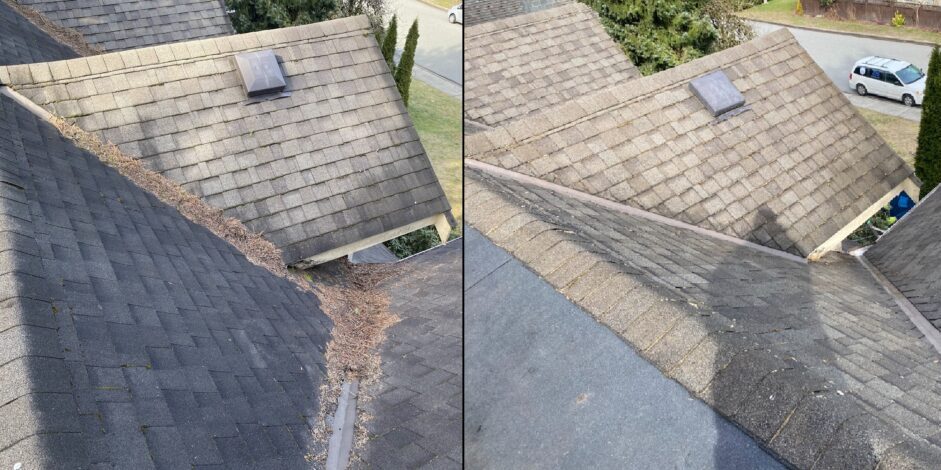
Before and after roof cleaning on an asphalt roof valley in Metro Vancouver — thick fir needle debris removed to reveal clean shingles

The Two Steps Hidden Inside a Full Roof Service

A thorough roof job in Metro Vancouver has two distinct parts:

  • Physical clearing — removing the debris sitting on your roof: fir needles, alder leaves, dead moss clumps, and the buildup that packs into valleys and gutter lines.
  • Chemical treatment (soft washing) — applying a low-pressure solution that kills the living organisms on the surface — moss, algae, and lichen — at the root level.

Some companies use “roof washing” to mean only the chemical step. Others use “roof cleaning” to mean only the physical step. Many use both terms for the whole job. This inconsistency is exactly why the terminology confuses homeowners — and why it matters to ask specifically what a quote includes before you book.

What “Roof Washing” Usually Means

When a company advertises roof washing, they typically mean a soft-wash treatment: a solution applied at low pressure that penetrates moss, lichen, and algae and kills the organism at its root. The treatment does not scrub moss off the surface immediately — it kills it in place. Over the following weeks, rain gradually rinses the dead material away.

Soft washing is the correct method for asphalt shingles. High-pressure washing strips the ceramic granules off shingle surfaces — the granules that protect against UV and water — and can void your manufacturer warranty. If any company quotes you “pressure washing your asphalt roof,” that is a significant red flag.

What “Roof Cleaning” Usually Means

In the physical sense, roof cleaning refers to the manual removal of debris: sweeping or blowing fir needles and leaves off the surface, hand-clearing the valleys where buildup packs in hardest, and pulling accumulated material out of the gutter line.
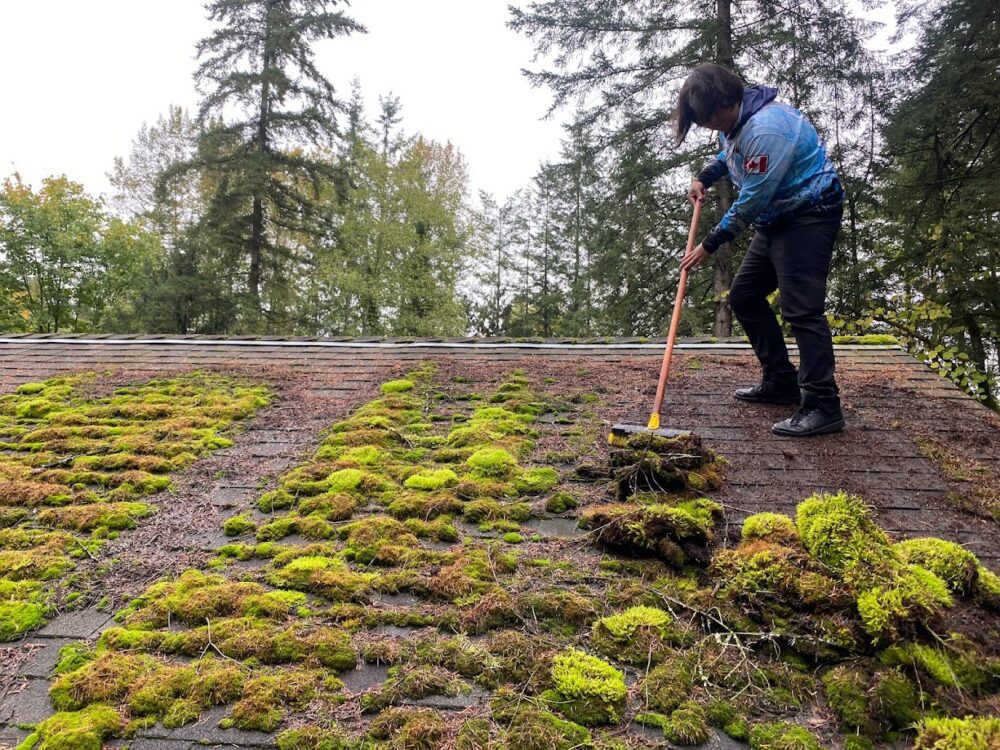
Technician brushing thick green moss off an asphalt shingle roof in Surrey BC with a push broom during professional roof cleaning

In Metro Vancouver, this step matters more than most homeowners realize. Douglas fir and western red cedar drop needles continuously. Those needles trap moisture against the shingle surface, and that retained moisture is what accelerates moss and lichen growth. Even after a soft-wash treatment kills existing moss, a roof still buried under a layer of needle debris will re-colonize far faster than a cleared one.

Physical clearing is also the most labour-intensive part of the job — which is why roof cleaning costs more than it looks like it should from the ground. Clearing valleys, walking the ridgeline, bagging debris, and flushing the gutters takes most of the time on site.

Why Metro Vancouver Roofs Need Both Steps Together

The region’s climate creates a two-layer problem. The debris problem — fir and cedar needles — is constant and year-round, worsening through fall. The biological growth problem — moss, algae, black lichen — accelerates through the wet season from October through April, when roofs stay damp for weeks at a stretch.

Treating with chemicals but skipping the physical clear leaves the root cause in place. The treatment kills what’s there, but a roof still buried in debris will re-infest within a season or two. Clearing the debris but skipping the treatment leaves living moss roots in the shingles — it looks better immediately but grows back within months.

A complete service does both: clear the surface first, then treat the growth. Many companies also flush the gutters as part of the same visit, which makes sense because debris cleared from the roof ends up there. If you’re separating services, gutter cleaning should follow the roof work, not precede it.

The Prevention Step Most Services Skip

After clearing and treating, the most effective addition is a zinc or copper strip installed along the ridge. Every time it rains, metal ions run down the roof surface, creating an environment where moss and lichen struggle to take hold. A treated roof with a ridge strip stays cleaner significantly longer than one without.

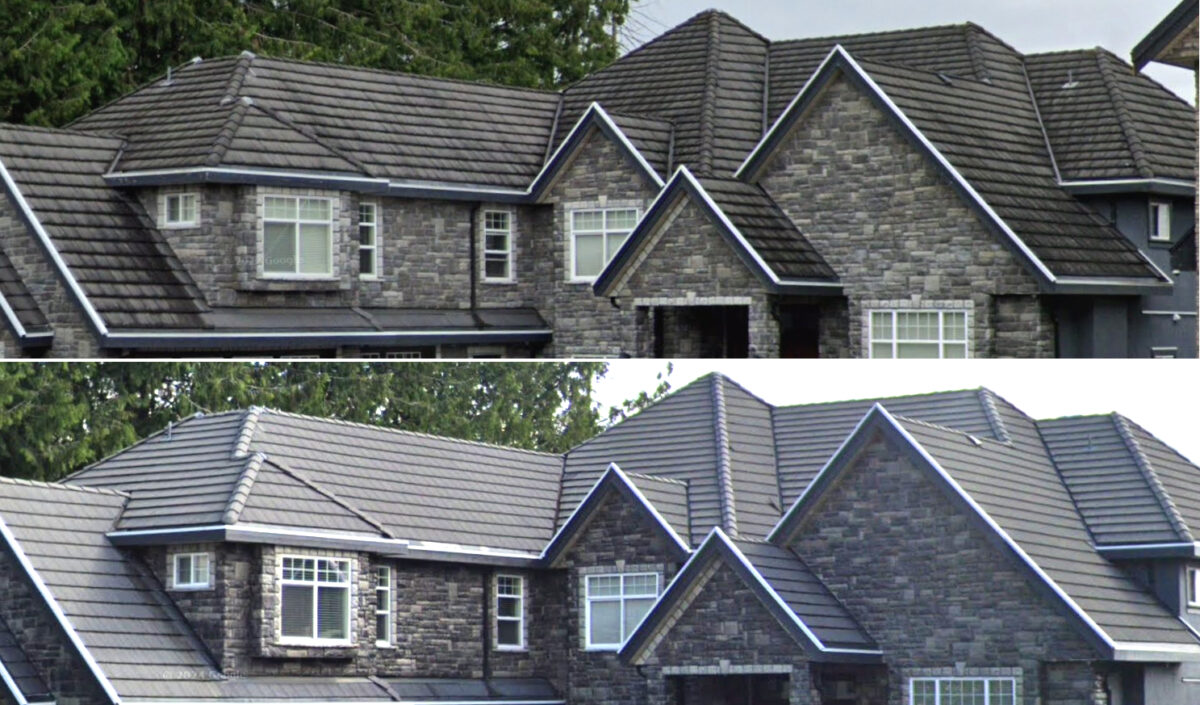
Asphalt shingle roof mid-treatment in Metro Vancouver showing bright zinc-treated shingles above and darker untreated shingles below

The photo above shows a roof mid-treatment: the brighter upper shingles have received the zinc-based solution; the darker lower shingles have not yet. After a few weeks, the colour evens out as rain dilutes and spreads the treatment. The visual difference during the job is one of the clearest ways to confirm the treatment has actually been applied.

Different Roof Materials, Different Rules

Everything above applies primarily to asphalt shingles, which cover the majority of homes in Surrey, Langley, Abbotsford, Maple Ridge, and across the Fraser Valley. Other materials require adjustments:

  • Concrete or clay tile roofs can tolerate low-pressure rinsing in addition to chemical treatment, since the surface is harder and less granule-dependent.
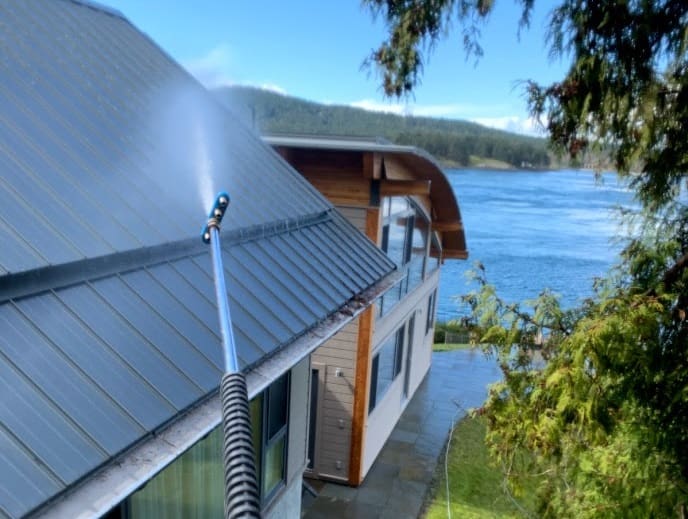
  • Metal roofs (corrugated, standing seam) handle slightly higher pressure without damage and can be rinsed more aggressively than asphalt.
  • Cedar shake roofs require the gentlest approach of all — chemical treatment only, with careful hand-clearing. The wood surface is soft and splits under mechanical pressure.

What to Ask Before Booking a Roof Cleaning Service

When comparing quotes, these questions separate a complete service from a partial one:

  • Is debris removal included? Some companies quote the chemical treatment only. If your roof has visible needle or moss buildup, confirm physical clearing is part of the price.
  • Soft wash or pressure wash? For asphalt and composite shingles, the answer should always be soft wash. Pressure washing is appropriate only for metal roofs and some tile applications.
  • Are workers harnessed? Roof work without fall protection is a liability risk for you as the homeowner. Ask about WorkSafeBC coverage and whether workers anchor from the ridge.
  • Are gutters flushed afterward? Debris cleared from the roof surface goes somewhere. Confirm the gutters are flushed before the crew leaves.
  • Is a prevention strip available? A zinc or copper ridge strip is the most effective way to extend the time between service calls. Not every homeowner wants it, but it should be offered.

Frequently Asked Questions

Is roof washing the same as roof cleaning?

Often, yes — many companies use the terms interchangeably to mean the full job. But not always. Roof washing can refer specifically to the chemical soft-wash treatment, while roof cleaning can refer specifically to the physical debris removal. When booking, confirm both steps are included if your roof has visible moss growth and debris buildup rather than assuming the quote covers everything.

Should roof cleaning and gutter cleaning be done at the same visit?

Yes, with roof work first. The debris cleared off the roof ends up in the gutters, so cleaning the gutters after the roof work is the logical sequence. Cleaning gutters first and then clearing the roof means cleaning them twice.

How long does it take for moss to fall off after a soft-wash treatment?

The treatment kills moss within a few days, but the dead material does not disappear immediately. Rain washes it away gradually over four to eight weeks depending on rainfall volume and how thick the moss was. The roof will not look dramatically cleaner the day of service — that is normal and expected with soft washing. The result becomes visible over the following month.

Does the roof cleaning solution affect surrounding plants?

A reputable roof cleaning service will pre-soak all plants and shrubs below the roofline with water before applying any solution, then rinse them again thoroughly after the work is complete. Ask your provider what their plant protection protocol is before they begin. If they do not have one, that is worth knowing in advance.

Ready to book a professional roof cleaning or soft-wash service for your Metro Vancouver home? Get a fast quote here — we serve Surrey, Langley, Abbotsford, Maple Ridge, New Westminster, and the surrounding area.
Categories
Pressure Washing Blog

House Washing vs. Pressure Washing: Which One Does Your Home Actually Need?

Every week we get calls from Metro Vancouver homeowners asking us to “pressure wash the house.” It makes sense — that’s the phrase everyone knows. But here’s the thing: if a company actually points a pressure washer at your siding, you should send them home. Washing a house and pressure washing a surface are two different jobs, done with different equipment, and mixing them up is how vinyl siding gets cracked, paint gets stripped, and water gets driven in behind the walls.

What house washing actually is

House washing — often called soft washing — uses low pressure, roughly the strength of a garden hose, combined with a cleaning solution that does the real work. The solution breaks down the green algae, dirt film, spider webs, and organic growth that build up on siding, and then everything is rinsed off gently from the ground or a ladder.

The pressure is the point. Vinyl, Hardie board, stucco, and painted wood are all designed to shed rain — not to withstand a 3,000 PSI jet at close range. High pressure can crack siding, blast water up behind panels where it can’t dry, etch lines into stucco, and turn peeling paint into a much bigger problem. Low pressure plus the right solution gets the siding cleaner, and it stays clean longer because the growth is actually killed instead of just knocked off the surface.

What pressure washing is for

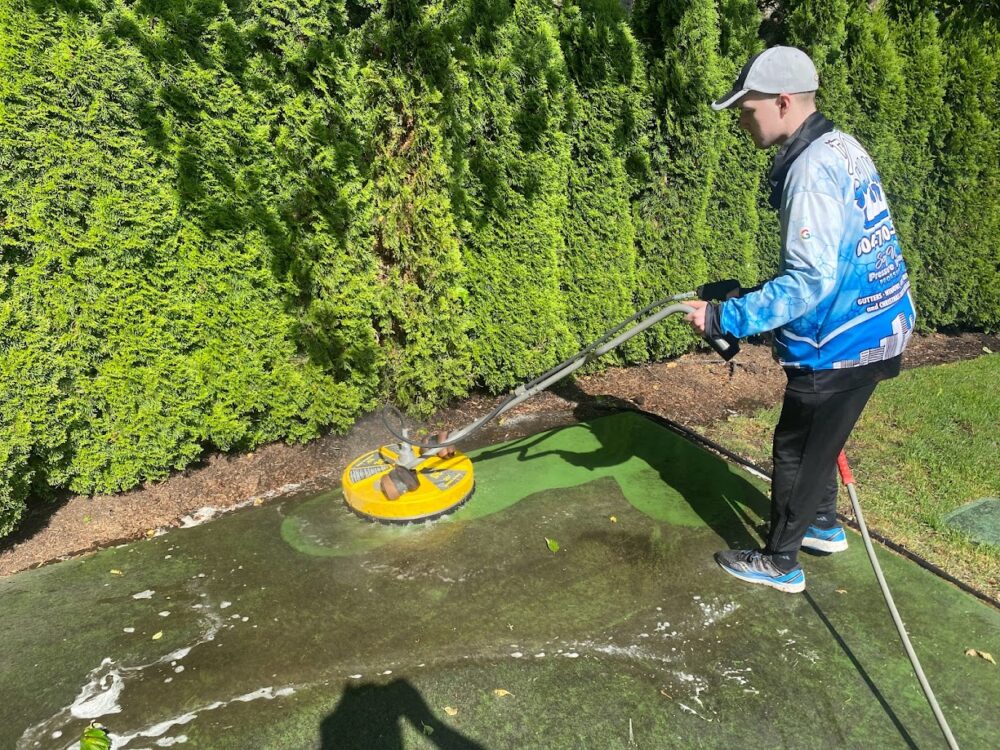
Real pressure washing belongs on hard horizontal surfaces: concrete driveways, sidewalks, paver patios, stone steps, and retaining walls. Those surfaces can take the force, and they need it — moss, black algae, and ground-in grime bond hard to concrete, and in our climate they make sidewalks and steps genuinely slippery by November.

A proper exterior cleaning visit usually combines both: soft washing for the siding, gutters’ exteriors, and trim, then pressure washing for the driveway and walkways. That’s why we quote them as separate line items — they’re separate jobs.

Shine City technician pressure washing green algae off a concrete patio in Metro Vancouver

Why Metro Vancouver homes need washing more often than most

Our climate is basically a greenhouse for algae. Long wet winters, mild temperatures, and tree cover mean the north and east sides of most homes in Surrey, Langley, and Vancouver start showing green within a couple of years. If you can see a green or grey film on your siding, that’s living growth — and it holds moisture against the wall, which shortens the life of paint and caulking.

A good rule of thumb for the Lower Mainland: wash the house every 2–3 years, or yearly if your home sits under trees or faces a greenbelt. It’s also the single highest-impact thing you can do before selling — a washed house photographs years newer.

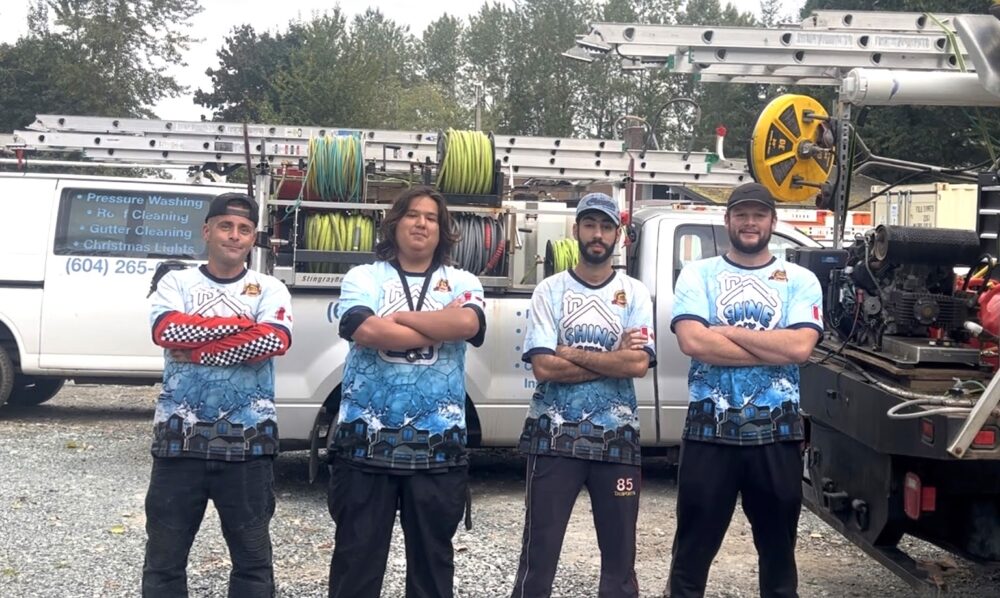
Shine City exterior cleaning crew with their truck and equipment in Surrey BC

What a professional house wash includes

  • All siding, washed top to bottom with low pressure and a cleaning solution matched to the surface
  • Soffits, fascia, and gutter exteriors (the black streaks on gutters are oxidation and need their own treatment)
  • Window frames and trim rinsed clean
  • Plants and garden beds around the house pre-soaked with water before we start and rinsed again after, so the cleaning solution never sits on them

That last point matters: ask any company you hire how they protect your landscaping. The honest answer involves water and timing, not magic chemicals.

FAQ

Will house washing damage my plants?

We pre-soak all surrounding plants and beds with plain water before washing and rinse them again afterwards, which dilutes any overspray before it can sit on the leaves. It’s a process thing — done in the right order, your garden is fine.

How much does a house wash cost?

It depends on the size of the home, the height, and how much growth has built up. We’ve put together a full local breakdown in our house washing cost guide for Vancouver.

Can I just rent a pressure washer and do it myself?

For a concrete pad, sure. For siding, a rented machine with no soft-wash setup is exactly the tool that causes the damage described above — and ladder work over landscaping with a live wand is no joke. This is one of the few jobs where the pro route is genuinely safer for the house.

How long does it take?

Most single-family homes take two to four hours. You don’t need to be home — we just need outside tap access.

Not sure which service your place needs? Send us a photo or grab a fast online quote — we’ll tell you straight whether it’s a house wash, a pressure wash, or both.

Categories
Pressure Washing Blog

How to Hire a Pressure Washing Company in Metro Vancouver (And What to Ask)

Why Surrey Homes Need Pressure Washing More Than Most

Surrey sits in one of the wettest corners of Canada. Between the Pacific fronts that roll in from October through April, the Douglas fir and cedar canopy that drops needles year-round, and clay-heavy soil that splashes onto concrete every time it rains, exterior surfaces here deteriorate faster than homeowners usually realize. Green algae sets into north-facing driveways within a single season. Moss takes root in concrete joints and gutter corners in under two years. Black mildew streaks creep down vinyl siding within months of going unattended.

The good news: a professional pressure washing visit can reverse most of that buildup in a few hours — if you hire the right company. The tricky part is knowing what separates a company that cleans properly from one that causes more damage than it fixes.

What a Professional Pressure Washing Visit in Surrey Actually Includes

A quality exterior cleaning visit covers more than spraying down a driveway. Depending on what you book, a complete visit typically includes:

  • Concrete surfaces — driveway, walkways, patio, and steps cleaned with a surface cleaner (the spinning disc tool that leaves an even result without pressure-wand streaks)
  • House soft washing — siding, fascia, and eavestroughs washed with a low-pressure soap application, not blasted at full PSI
  • Gutter face cleaning — the outside of the eavestrough wiped clean (this is different from interior gutter cleaning, which removes the debris packed inside the channel)
  • Surface prep — sweeping or blowing loose debris before washing so fir needles and gravel don’t become projectiles

Before any cleaning begins, a professional crew pre-soaks surrounding plants and garden beds with water, then rinses them again once the job is complete. That is standard practice — not a premium add-on.

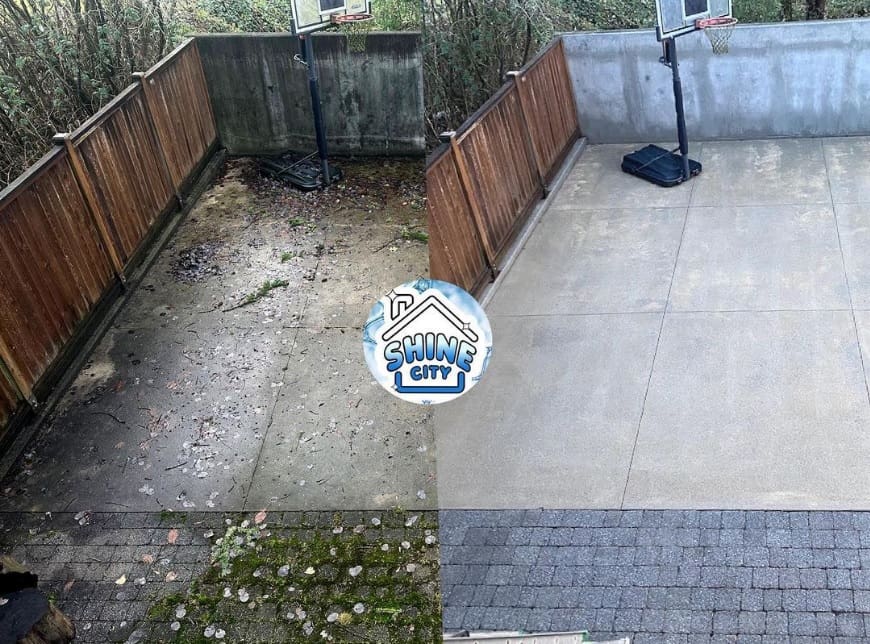
Before and after pressure washing a concrete backyard pad in Surrey BC — Shine City Pressure Washing

Soft Washing vs. High Pressure: Which Surface Needs Which

This is the single most important thing to understand before hiring anyone. Using the wrong pressure on the wrong surface causes real, sometimes irreversible damage.

High-pressure washing (2,000–4,000 PSI) is appropriate for:

  • Poured concrete driveways, walkways, and patios
  • Paver and natural stone surfaces
  • Brick walls and concrete retaining walls
  • Concrete block foundations

Low-pressure soft washing is required for:

  • Vinyl siding — high pressure forces water behind panels and into the wall assembly
  • Painted wood surfaces — blasting strips paint and raises the wood grain
  • Cedar shakes and HardiePlank — both absorb damage before it becomes visible
  • Any roof surface — roof cleaning must always be done at low pressure; asphalt shingles have a granule coating that high-pressure wands strip away, shortening the roof’s life by years and voiding most manufacturer warranties

Any company that proposes pressure washing your roof with a standard high-pressure wand is a company to avoid. This is one of the most common ways Metro Vancouver homeowners end up filing insurance claims for premature shingle failure.

Questions to Ask Before You Book

A few direct questions separate professional operations from corner-cutters quickly:

  • “Are you insured, and can you send proof?” — You need general liability coverage and a WorkSafeBC registration number. Anyone doing paid work on your property needs both. No proof of either is a dealbreaker.
  • “What equipment do you use for concrete versus siding?” — A professional names a surface cleaner for flat concrete and clearly separates high-pressure from soft-wash by surface type. A vague answer like “we use a pressure washer on everything” is a warning sign.
  • “What exactly is included in the quote?” — Get scope in writing. “Pressure washing” can mean one driveway or the entire exterior. Scope disputes at invoice time are among the most common complaints against cleaning companies.
  • “What do you do about garden beds and landscaping?” — Pre-wet before cleaning, rinse again after. If they haven’t considered this, their process probably isn’t thorough.
  • “Are you cleaning inside the gutters or just the outside face?” — These are completely different services. Know which one you’re getting before the crew arrives.

Red Flags That Should Make You Look Elsewhere

Exterior cleaning in BC requires no formal licence. That keeps prices competitive — but it also means quality varies widely. Watch for:

  • No insurance or hesitation to provide it — Non-negotiable. If a contractor damages your siding, a vehicle, or your landscaping and isn’t insured, you’re paying for the repair.
  • Offering to pressure wash your roof with a wand at full power — This damages shingles and voids warranties. Walk away.
  • Very low quotes with vague scope — “Full exterior wash, $199” often means one small surface, done quickly, without surface-specific technique. Real cleaning takes real time.
  • No portfolio, reviews, or web presence — Established companies show before/after results. A company with nothing to show isn’t necessarily a scam, but carries more risk than one with a track record.
  • No local address or service area specifics — Companies that operate locally in Surrey and Metro Vancouver are easier to follow up with if something goes wrong.

Shine City technician using a surface cleaner on an algae-covered concrete driveway in Surrey BC

How Often Does a Surrey Home Actually Need Pressure Washing?

The honest answer depends more on your specific property than on any fixed schedule. A north-facing driveway under a cedar canopy needs cleaning every year. South-facing open concrete in a sunny yard might go two to three years before it looks bad. As a rough guide for Metro Vancouver conditions:

  • Driveway and walkways: every 1–2 years, sooner if you have significant tree canopy overhead or oil staining from vehicles
  • House siding: every 1–3 years; north-facing walls and homes shaded by large firs go green fastest. See our house washing service for what a full exterior soft wash includes.
  • Patios and decks: annually in shaded yards; every 2 years in open, south-facing spots
  • Gutters (interior): at minimum once per year, ideally twice for homes under heavy fir and cedar needle fall — which describes most of Surrey, Langley, and Maple Ridge

A trustworthy company assesses your property honestly and tells you what actually needs doing, rather than quoting every available service to pad the total.

Frequently Asked Questions

How much does pressure washing cost in Surrey, BC?

Cost depends on which surfaces you’re cleaning, their size, and how much buildup has accumulated. For a detailed breakdown, see our pressure washing service page. In general, the cost of a professional clean is a fraction of what you’d spend replacing algae-damaged concrete or repainting mildew-stained siding.

Can I pressure wash my own driveway with a rented machine?

For a flat, open concrete driveway with no fragile edges, a rented surface cleaner can do a reasonable job. Where DIY gets risky: near window seals, on siding, around landscaping, or on anything more than a step off the ground. Rental machines are also typically high-pressure-only — correct for bare concrete, but wrong for most other surfaces around your home.

Will pressure washing damage my home?

At the right pressure on the right surfaces, no. At the wrong pressure on the wrong surfaces — high PSI on siding, a wand blasted directly against window seals, or full pressure on a roof — yes, and the damage can be significant. Technique is what separates a clean home from a repair bill, which is why vetting the company before they show up matters.

How do I prepare my home for a pressure washing visit?

Close all windows and doors, move outdoor furniture and planters away from the cleaning zones, and point out any fragile plants or recently installed landscaping when the crew arrives. The team pre-wets all garden beds before work begins and rinses them again when the job is done.

Book Pressure Washing in Surrey or Metro Vancouver

Shine City Pressure Washing serves Surrey, Langley, Maple Ridge, Abbotsford, and the broader Metro Vancouver area. If you want a straight quote — exact scope in writing, surface-specific technique, and proof of insurance before we start — request a free quote here. We’ll assess your property honestly, tell you what actually needs doing, and send a written quote the same day.