Categories
Pressure Washing Blog

Moss Removal in Metro Vancouver: A Homeowner’s Guide to Every Surface

Metro Vancouver gets more annual rainfall than almost anywhere else in Canada — and when you combine persistent rain with the shade thrown by Douglas fir and western red cedar, you get conditions where moss colonizes every outdoor surface within a few years. Roofs, driveways, front steps, wood decks, and siding all grow moss and algae in Surrey, Burnaby, Langley, Maple Ridge, Coquitlam, and Abbotsford. This guide covers what moss actually does to each surface, how professionals remove it safely, and what slows it down long-term.

Why Metro Vancouver Grows Moss Faster Than Almost Anywhere Else

Three conditions overlap here that don’t combine the same way in most Canadian cities:

  • Year-round rainfall: Surrey and Langley average 1,200–1,500 mm of rain per year, most of it falling between October and April. Outdoor surfaces stay wet for days at a time.
  • Acidic needle drop: Douglas fir, western red cedar, and western hemlock shed needles onto roofs, gutters, and pathways. Those needles decompose into a thin organic layer — exactly the growing medium moss needs to take hold.
  • Slow drying: North-facing surfaces and heavily treed lots can take two or three days to dry after a rain event. Moss needs sustained moisture to spread, and Metro Vancouver provides it for six solid months every year.

By the time moss is visible from the ground, it has usually been growing for a year or more — and it’s already doing damage.

Roof Moss: The Most Costly Problem

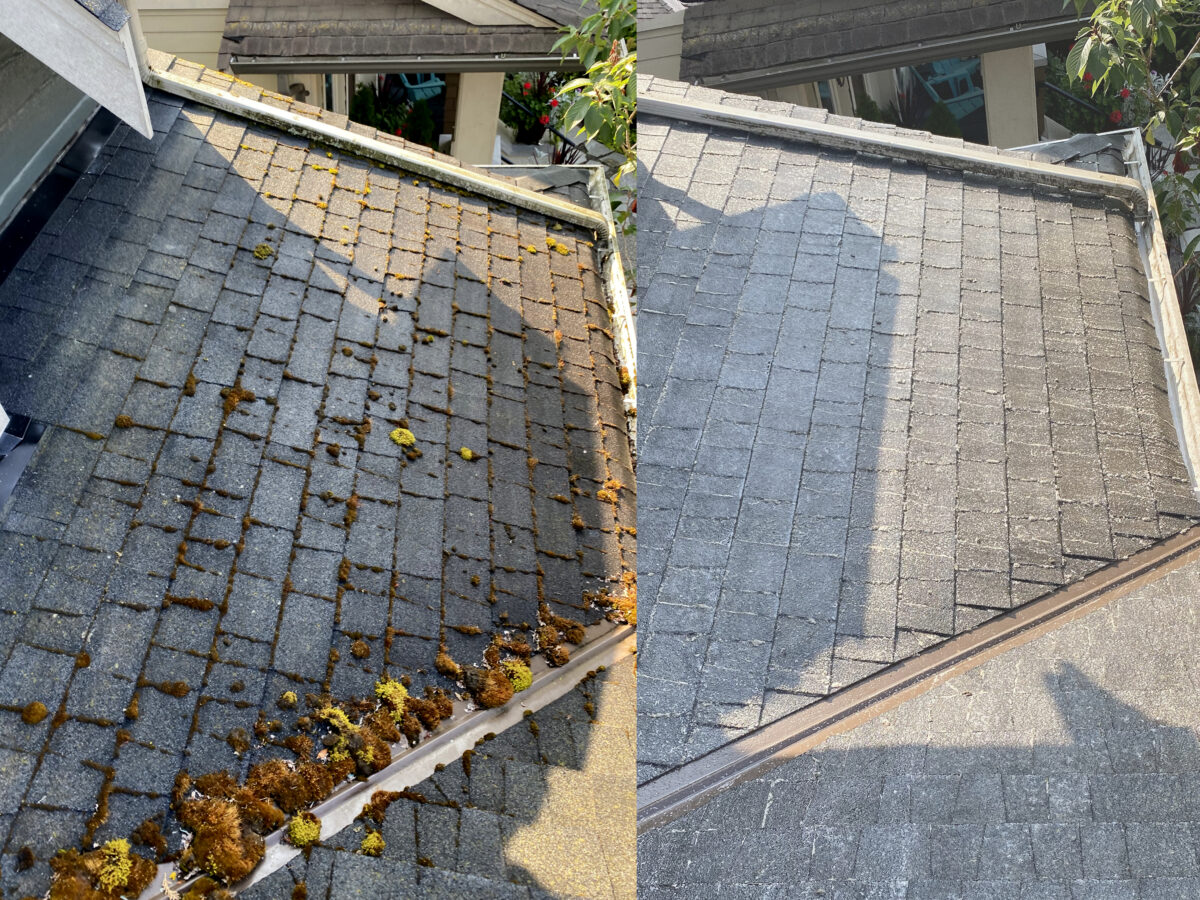
moss removal Vancouver — asphalt shingle roof dotted with yellow-green moss clumps

Asphalt shingles are the most common roofing material across Metro Vancouver, and they’re particularly vulnerable. Moss roots grow under the granule layer of each shingle, loosening those granules from the fibre mat below. Over several seasons this causes cracking, curling, and premature aging — often reducing a 25-year roof’s lifespan to 15 years or less.

Cedar shake roofs trap moisture against the wood wherever moss sits, accelerating rot. On tile roofs, moss can lift the edges of tiles as growth spreads underneath them.

Professional roof cleaning and moss removal uses soft-bristle brushes to clear moss mechanically, followed by low-pressure rinsing — not the high-pressure blasting that strips granules and voids most manufacturer warranties. A post-removal treatment applied to the shingles kills remaining spores and slows regrowth. Most asphalt roofs in Surrey or the Fraser Valley need this done every two to three years.

Concrete, Driveways, and Front Steps

moss removal concrete steps Langley — before and after of mossy walkway then completely clean

Moss and black algae turn concrete green within a season wherever it stays shaded and damp. The most immediate concern is the slip hazard — moss-covered steps and walkways become genuinely dangerous during Metro Vancouver’s rainy season, which runs from October through April. Over time, algae and moss penetrate the pores of the concrete and contribute to surface spalling, a problem made worse during freeze-thaw cycles in Abbotsford and Langley where overnight temperatures occasionally dip below freezing.

Pressure washing with a rotary surface cleaner removes moss from concrete efficiently without etching the surface. Heavily stained driveways benefit from a pre-treatment step that breaks down the organic material first. A single driveway cleaning visit typically clears years of accumulated moss, algae, and staining and restores the surface close to its original colour.

Wood Decks and Fences

Shaded backyards in Coquitlam, Maple Ridge, and the North Shore are particularly hard on wood decks and fences. Moss breaks down wood fibres, traps moisture against the boards, and speeds up rot in ways that aren’t obvious until the damage is structural. A moss-covered deck also creates a significant slip hazard for children, pets, and anyone stepping outside during wet weather — which is most of the year here.

Cleaning wood surfaces requires lower pressure than concrete, often combined with a detergent that lifts organic matter without raising the wood grain. The deck needs to dry fully before any staining or sealing is applied — typically 48 to 72 hours in Metro Vancouver conditions.

Siding and House Exterior

Vinyl, stucco, and fibre cement siding all develop algae and mildew in Metro Vancouver, especially on north-facing walls and anywhere tree branches overhang the house. It often shows up as green or black streaking rather than a raised moss mat — but the source is the same: biological growth feeding on accumulated moisture and organic debris.

Soft washing — low-pressure application of a cleaning solution followed by a thorough rinse — is the right approach for siding. It kills algae at the source rather than just blasting the surface clean temporarily. Before and after the treatment, surrounding plants and garden beds are pre-soaked and rinsed with water to protect them from runoff. House soft washing typically covers siding, soffits, and fascia in one visit.

What Professionals Do Differently
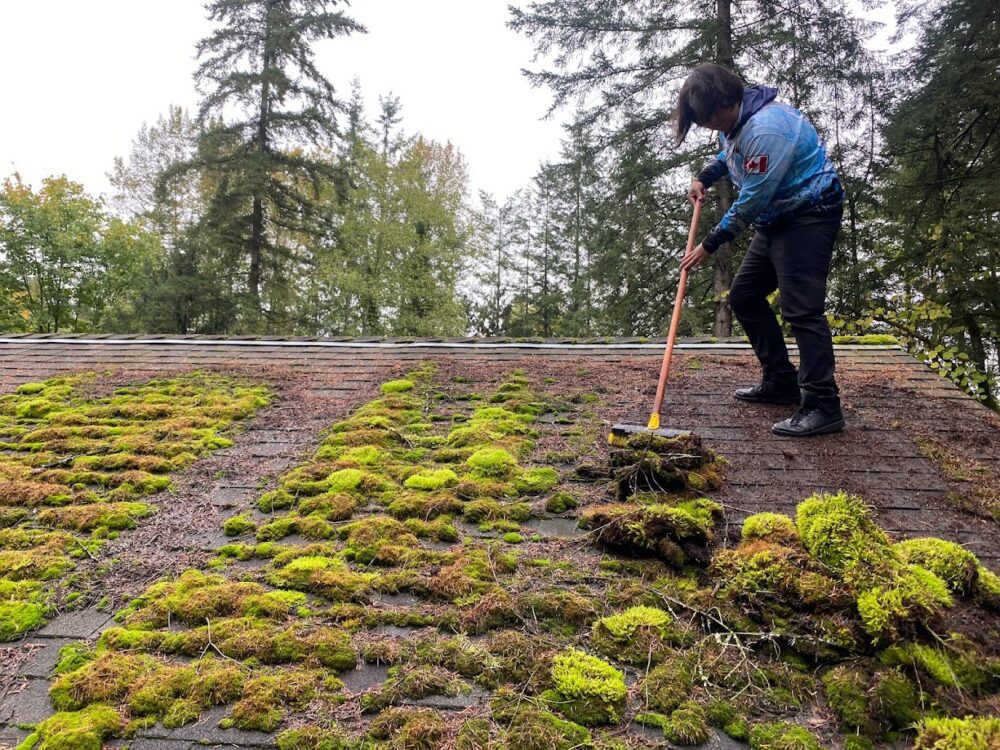
professional moss removal roof Surrey — technician brushing thick green moss off asphalt shingles with a push broom

DIY moss removal — a stiff brush and a garden hose — clears the surface layer but leaves roots and spores behind. Growth is usually back within months. A professional approach addresses the full cycle:

  • Mechanical removal first: Brushing or blowing all debris off the surface before applying any treatment, so cleaning solutions can reach the root layer underneath.
  • Correct pressure for each surface: Low-pressure soft washing for roofs and siding, rotary surface cleaners for concrete and pavers.
  • Post-treatment: A residual applied after removal that continues killing spores and meaningfully slows regrowth between service visits.
  • Gutter clearing: Brushing moss off a roof generates significant debris that washes straight into gutters if they’re not cleared at the same time. Booking gutter cleaning alongside roof moss removal prevents that debris from blocking downspouts heading into winter.

Working on a wet, moss-covered roof slope without proper footwear, rope anchors, and a fall-arrest system is a genuine hazard. Professional crews bring all of that as standard — it’s one of the clearest reasons to hire rather than attempt a roof job yourself.

How Often Does Moss Need to Be Removed?

It depends on exposure. A south-facing roof in an open Surrey or Langley neighbourhood might only need treatment every three to four years. A north-facing roof under a heavy Douglas fir canopy in Maple Ridge or Coquitlam might need it every 18 months. Concrete on the shaded side of the house typically needs cleaning every two years in Metro Vancouver.

The simplest indicator: if moss is clearly visible from the ground, it’s already past due.

Frequently Asked Questions

Is moss removal the same as pressure washing?

Not for roofs. High-pressure washing strips the granule layer from asphalt shingles and voids most roofing warranties — manufacturers specify a maximum PSI for cleaning. Roof moss removal uses soft brushing and low-pressure rinsing only. For concrete and driveways, pressure washing with a rotary surface cleaner is the appropriate method and works well.

Will the moss come back after it’s removed?

Yes — Metro Vancouver’s climate ensures the conditions for moss never fully disappear. A post-treatment application slows regrowth significantly. The most effective long-term step you can take is trimming overhanging branches to improve airflow and allow more sunlight to reach the surfaces.

Does moss actually damage concrete?

Over time, yes. Algae and moss penetrate the surface pores and weaken the material. This is made worse by freeze-thaw cycles in colder parts of the Fraser Valley. The more immediate problem is the slip hazard — moss-covered steps and walkways become dangerous during wet weather, and Metro Vancouver has a lot of it.

Can you remove roof moss yourself?

For a small ground-level patio, DIY is manageable. For a roof, the combination of height, slope, and wet moss creates a genuine fall risk without the right safety equipment and training. Most homeowners find professional moss removal is worth it on safety grounds alone, not just for the quality of the result.

Ready to clear moss from your roof, driveway, or siding? Shine City serves Surrey, Langley, Abbotsford, Maple Ridge, Burnaby, Coquitlam, and the rest of Metro Vancouver. Get a fast quote today.
Categories
Pressure Washing Blog

What a Professional Gutter Cleaning Service Should Include: A Metro Vancouver Checklist

Most homeowners in Metro Vancouver hire a gutter cleaning company once or twice a year and trust the job was done right. But the quality gap between a thorough service and a quick brush-out is significant — and the consequences show up as fascia rot, flooded window wells, and foundation seepage by mid-November.

Here is exactly what a professional gutter cleaning should include, what separates a good company from a fast one, and how to verify the work after the crew leaves.

Why Metro Vancouver Gutters Fill Up So Fast

Homeowners in Surrey, Langley, Maple Ridge, Abbotsford, and Vancouver deal with a gutter-clogging cycle that repeats every year. Douglas fir and western red cedar needles drop in late summer, deciduous leaves pile on in October, and the rainy season arrives in November — often before most people have booked a cleaning. A gutter that looks fine from the ground in September can be completely blocked by the time the first big storm hits.

Unlike drier regions with one short fall window, Metro Vancouver’s mild, wet winters keep gutters saturated for months. That standing water and weight against the fascia is what causes the long-term damage most homeowners attribute to “old gutters.”

Professional gutter cleaning service result — clean gutter line and downspout above a Metro Vancouver backyard

The 6 Things Every Professional Gutter Cleaning Should Include

When you book a professional gutter cleaning service, this is what should always happen on a complete job — not just what sometimes happens on a fast one.

1. Full Debris Removal From Every Gutter Run

Some companies only clean the sections they can reach from a single ladder position on the driveway side. A complete service means every run is cleared: front gutters, back gutters, garage gutters, and any lower-roof channels over bay windows or additions. Debris should be removed by hand scooping or blower — not just pushed toward the downspout where it re-packs and blocks the outlet.

2. Downspout Flush and Flow Test

Cleared gutters still back up if the downspouts are blocked. Every downspout should be flushed with water to confirm it drains freely to grade. If a downspout is packed with compacted fir needles or a mud plug, it needs to be cleared — not just noted. Ask before you book whether downspout flushing is included in the price. On many properties in Maple Ridge and Abbotsford, where fir canopy is dense, downspouts block more often than the gutters themselves.

3. Spot Inspection for Gutter Damage

A technician already on the ladder has the best view your gutters get all year. A professional crew will flag sagging sections, separated joints, rust patches, or gutter spikes that have pulled loose from the fascia. They are not there to repair it — that is a separate job — but you should receive a note about anything that needs attention. If the company reports zero findings on a 15-year-old Surrey home surrounded by firs, ask why.

4. Gutter Face and Fascia Wipe-Down

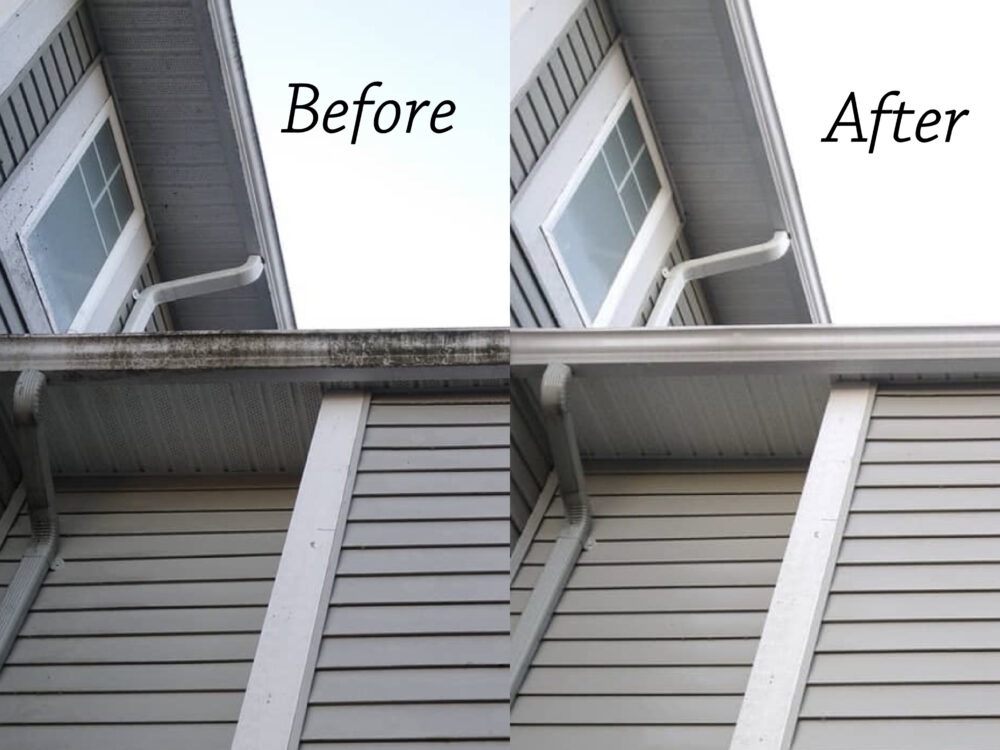
Gutters overflow before they get cleaned, and that overflow leaves black algae streaks down the exterior face. Some companies include a wipe-down of the gutter face as part of the service; others charge extra. Know before you book. On vinyl and aluminum gutters the staining is cosmetic, but on wood fascia those streaks often mean moisture has been sitting against the board long enough to merit a closer look.

5. Before and After Photo Documentation

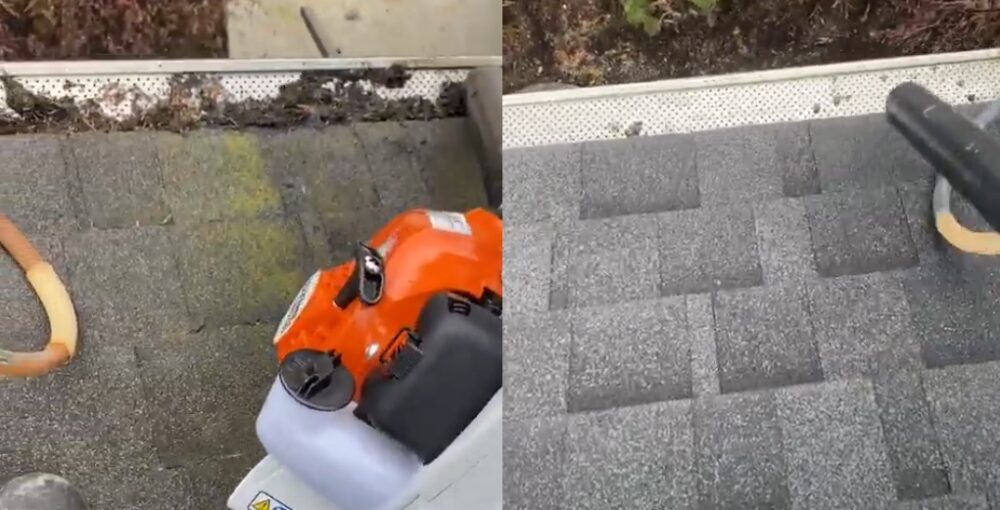
You should not have to climb a ladder to verify the work was done. A company that sends before and after photos from every run gives you proof and holds themselves accountable to the quality of the result. Photos also build a documented history of your gutter condition — useful if you ever make a water damage insurance claim and need to show the gutters were maintained.

Gutter cleaning service before and after Metro Vancouver — debris cleared with blower then clean shingles

6. Debris Disposal

What happens to the pile of wet fir needles and decomposed leaves that comes out of the gutters? It should leave with the crew — not end up on your lawn, in your garden beds, or scattered onto the neighbour’s driveway. Always confirm debris disposal is part of the quoted price and not an add-on.

Red Flags That Suggest a Cut-Rate Job

  • No ladder used on a two-storey home. Ground-level leaf blowers can push visible debris out of lower sections, but they cannot clear packed downspouts or inspect gutter condition. If no one went up, the job was not completed properly.
  • In and out in 20 minutes. A thorough cleaning on a typical Surrey or Langley home with 100–150 feet of gutter should take 60–90 minutes. Extremely fast visits almost always mean partial coverage.
  • Downspouts never mentioned. If the company did not ask about downspouts or include them in the quote, assume they were not flushed.
  • No photos, no written summary. If you cannot see what was done, you are taking their word for it. Reputable gutter cleaning companies document their work as a matter of course.

How to Verify the Work After the Crew Leaves

You do not need a ladder. After the crew leaves, run a garden hose into each gutter section for 30 seconds and watch the downspout. Water should exit cleanly within a few seconds. If it backs up over the gutter edge or the downspout trickles instead of flows, that section was not properly cleared and should be addressed under warranty. Also check your downspout exits the next time it rains — if water is not flowing freely from the bottom, the spout is still blocked.

Should You Combine Gutter Cleaning With Roof Cleaning?

In Metro Vancouver, most reputable exterior cleaning companies schedule roof cleaning and gutter cleaning at the same appointment — and for good reason. Roof cleaning pushes fir needles, moss clumps, and debris down into the gutters. If the gutters were already cleaned before the roof, they need to be cleared again. On a combined appointment, the correct sequence is roof first, gutters second, in a single visit. If your company does not mention this order, ask.

Gutter cleaning near me — before and after of white gutter face, soffit and siding on a Metro Vancouver home

How Often Do Gutters Need Cleaning in Metro Vancouver?

For most Metro Vancouver homes with mature trees nearby, twice a year is the right schedule: once in late spring after the fir needle drop, and once in late October before the heavy rains arrive. Homes under dense fir canopy — common in Maple Ridge, Abbotsford, and parts of Langley — often need three cleanings per year. October is the most critical window: gutters not cleared before the first major November storm are the ones that overflow and cause fascia and foundation damage.

For a full breakdown of timing by tree type and home situation, see our guide on how often gutters should be cleaned.

Frequently Asked Questions

Do gutter cleaning companies also flush downspouts?

They should — but not all of them do by default. Confirm before booking. A blocked downspout is the most common cause of gutter overflow, and clearing just the trough without flushing the spout is an incomplete job. Always ask specifically whether downspout flushing is included in the quoted price.

Is it worth paying more for a company that sends photos?

Yes. Photos are not just reassurance — they create a dated record of your gutter condition and any damage observed at time of service. If you ever have a water damage claim involving gutters, that documentation has real practical value. It also signals the company stands behind their work enough to show it.

Can gutter cleaning damage the gutters or fascia?

Done correctly, no. Damage happens when crews use high-pressure water inside the gutter channel (which forces water behind the fascia board) or yank out packed debris instead of scooping carefully. A proper crew uses hand tools or low-pressure air for the interior and reserves pressure washing for the exterior face only, and only on surfaces rated for it.

What time of year is worst for Metro Vancouver gutters?

October. Douglas fir needles have finished dropping, deciduous leaves are coming down fast, and the rainy season is one or two weeks away. Gutters left uncleared through October and into November are the ones that overflow, hold water against the fascia all winter, and cause the expensive damage homeowners deal with in spring. If you can only schedule one cleaning per year, make it the end of October.

Ready to get your gutters properly cleared before the rains arrive? Get a quote from Shine City — we serve Surrey, Langley, Maple Ridge, Abbotsford, Vancouver, and across Metro Vancouver, and we send photos of every job.