
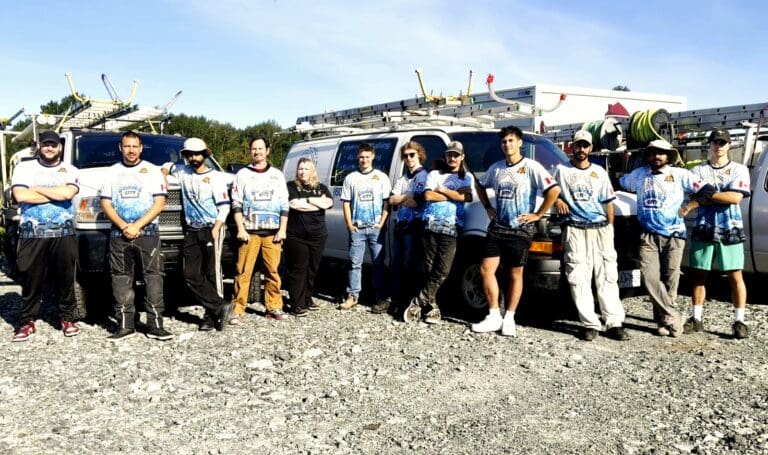





Metro Vancouver gets more annual rainfall than almost anywhere else in Canada — and when you combine persistent rain with the shade thrown by Douglas fir and western red cedar, you get conditions where moss colonizes every outdoor surface within a few years. Roofs, driveways, front steps, wood decks, and siding all grow moss and algae in Surrey, Burnaby, Langley, Maple Ridge, Coquitlam, and Abbotsford. This guide covers what moss actually does to each surface, how professionals remove it safely, and what slows it down long-term.
Why Metro Vancouver Grows Moss Faster Than Almost Anywhere Else
Three conditions overlap here that don’t combine the same way in most Canadian cities:
- Year-round rainfall: Surrey and Langley average 1,200–1,500 mm of rain per year, most of it falling between October and April. Outdoor surfaces stay wet for days at a time.
- Acidic needle drop: Douglas fir, western red cedar, and western hemlock shed needles onto roofs, gutters, and pathways. Those needles decompose into a thin organic layer — exactly the growing medium moss needs to take hold.
- Slow drying: North-facing surfaces and heavily treed lots can take two or three days to dry after a rain event. Moss needs sustained moisture to spread, and Metro Vancouver provides it for six solid months every year.
By the time moss is visible from the ground, it has usually been growing for a year or more — and it’s already doing damage.
Roof Moss: The Most Costly Problem

Asphalt shingles are the most common roofing material across Metro Vancouver, and they’re particularly vulnerable. Moss roots grow under the granule layer of each shingle, loosening those granules from the fibre mat below. Over several seasons this causes cracking, curling, and premature aging — often reducing a 25-year roof’s lifespan to 15 years or less.
Cedar shake roofs trap moisture against the wood wherever moss sits, accelerating rot. On tile roofs, moss can lift the edges of tiles as growth spreads underneath them.
Professional roof cleaning and moss removal uses soft-bristle brushes to clear moss mechanically, followed by low-pressure rinsing — not the high-pressure blasting that strips granules and voids most manufacturer warranties. A post-removal treatment applied to the shingles kills remaining spores and slows regrowth. Most asphalt roofs in Surrey or the Fraser Valley need this done every two to three years.
Concrete, Driveways, and Front Steps

Moss and black algae turn concrete green within a season wherever it stays shaded and damp. The most immediate concern is the slip hazard — moss-covered steps and walkways become genuinely dangerous during Metro Vancouver’s rainy season, which runs from October through April. Over time, algae and moss penetrate the pores of the concrete and contribute to surface spalling, a problem made worse during freeze-thaw cycles in Abbotsford and Langley where overnight temperatures occasionally dip below freezing.
Pressure washing with a rotary surface cleaner removes moss from concrete efficiently without etching the surface. Heavily stained driveways benefit from a pre-treatment step that breaks down the organic material first. A single driveway cleaning visit typically clears years of accumulated moss, algae, and staining and restores the surface close to its original colour.
Wood Decks and Fences
Shaded backyards in Coquitlam, Maple Ridge, and the North Shore are particularly hard on wood decks and fences. Moss breaks down wood fibres, traps moisture against the boards, and speeds up rot in ways that aren’t obvious until the damage is structural. A moss-covered deck also creates a significant slip hazard for children, pets, and anyone stepping outside during wet weather — which is most of the year here.
Cleaning wood surfaces requires lower pressure than concrete, often combined with a detergent that lifts organic matter without raising the wood grain. The deck needs to dry fully before any staining or sealing is applied — typically 48 to 72 hours in Metro Vancouver conditions.
Siding and House Exterior
Vinyl, stucco, and fibre cement siding all develop algae and mildew in Metro Vancouver, especially on north-facing walls and anywhere tree branches overhang the house. It often shows up as green or black streaking rather than a raised moss mat — but the source is the same: biological growth feeding on accumulated moisture and organic debris.
Soft washing — low-pressure application of a cleaning solution followed by a thorough rinse — is the right approach for siding. It kills algae at the source rather than just blasting the surface clean temporarily. Before and after the treatment, surrounding plants and garden beds are pre-soaked and rinsed with water to protect them from runoff. House soft washing typically covers siding, soffits, and fascia in one visit.
What Professionals Do Differently
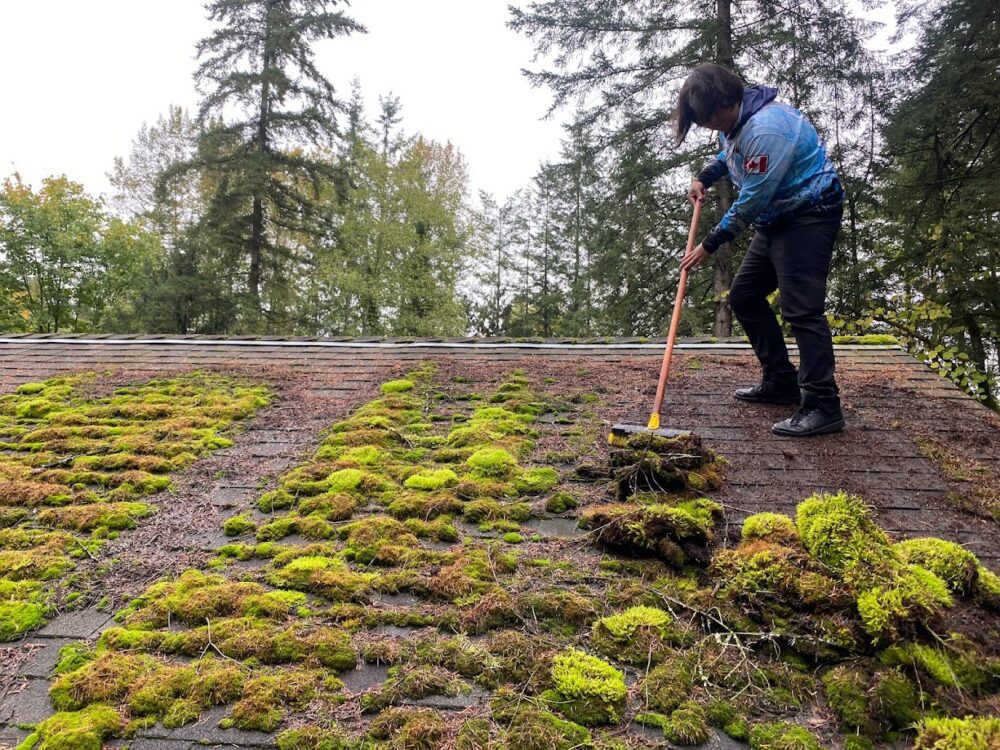
DIY moss removal — a stiff brush and a garden hose — clears the surface layer but leaves roots and spores behind. Growth is usually back within months. A professional approach addresses the full cycle:
- Mechanical removal first: Brushing or blowing all debris off the surface before applying any treatment, so cleaning solutions can reach the root layer underneath.
- Correct pressure for each surface: Low-pressure soft washing for roofs and siding, rotary surface cleaners for concrete and pavers.
- Post-treatment: A residual applied after removal that continues killing spores and meaningfully slows regrowth between service visits.
- Gutter clearing: Brushing moss off a roof generates significant debris that washes straight into gutters if they’re not cleared at the same time. Booking gutter cleaning alongside roof moss removal prevents that debris from blocking downspouts heading into winter.
Working on a wet, moss-covered roof slope without proper footwear, rope anchors, and a fall-arrest system is a genuine hazard. Professional crews bring all of that as standard — it’s one of the clearest reasons to hire rather than attempt a roof job yourself.
How Often Does Moss Need to Be Removed?
It depends on exposure. A south-facing roof in an open Surrey or Langley neighbourhood might only need treatment every three to four years. A north-facing roof under a heavy Douglas fir canopy in Maple Ridge or Coquitlam might need it every 18 months. Concrete on the shaded side of the house typically needs cleaning every two years in Metro Vancouver.
The simplest indicator: if moss is clearly visible from the ground, it’s already past due.
Frequently Asked Questions
Is moss removal the same as pressure washing?
Not for roofs. High-pressure washing strips the granule layer from asphalt shingles and voids most roofing warranties — manufacturers specify a maximum PSI for cleaning. Roof moss removal uses soft brushing and low-pressure rinsing only. For concrete and driveways, pressure washing with a rotary surface cleaner is the appropriate method and works well.
Will the moss come back after it’s removed?
Yes — Metro Vancouver’s climate ensures the conditions for moss never fully disappear. A post-treatment application slows regrowth significantly. The most effective long-term step you can take is trimming overhanging branches to improve airflow and allow more sunlight to reach the surfaces.
Does moss actually damage concrete?
Over time, yes. Algae and moss penetrate the surface pores and weaken the material. This is made worse by freeze-thaw cycles in colder parts of the Fraser Valley. The more immediate problem is the slip hazard — moss-covered steps and walkways become dangerous during wet weather, and Metro Vancouver has a lot of it.
Can you remove roof moss yourself?
For a small ground-level patio, DIY is manageable. For a roof, the combination of height, slope, and wet moss creates a genuine fall risk without the right safety equipment and training. Most homeowners find professional moss removal is worth it on safety grounds alone, not just for the quality of the result.
Ready to clear moss from your roof, driveway, or siding? Shine City serves Surrey, Langley, Abbotsford, Maple Ridge, Burnaby, Coquitlam, and the rest of Metro Vancouver. Get a fast quote today.